Showing posts with label aspiring. Show all posts

Friday, December 2, 2016

8 Ways to Break Writer's Block

You jump on the creative train and the passengers are missing. 
You check the first train car: conductor gone.

There's no one to help you but you. Happens to the new and veteran of the writing realm. What do you do? You don't know so here's what I do. It may not work for you. These are just ideas to get it going again.


REBEL

1. Start on something you are not supposed to be doing. Or you are supposed to be doing but didn't want to do in the first place.

I'm very serious. When I worked, my creativity bugged the crap out of me when I was actually working on work, instead of working on drawing or writing. I can't explain it. Ask a neuropsychologist. Ask my neuroscience professor. She was amazing. It's like when you're not thinking about it, stressing that part of the brain, your brain can relax. It's like your brain had to go pee, but you're staring at it, waiting for it to happen. The brain can't go when you're creepy. So do something else and it'll be able to relieve itself.


READ


1) Re-read your work! Get back into your story! Haven't written for a while? You might have to read your entire story to get the feel for it again. Sit down, pen 'n' paper close to you, and just read it. Don't focus on the errors, focus on the tone and plot. You need to understand your protagonist again and you need to see where you might have been going with the book.

If I'm stuck, I read the chapters that are huge in plot info. Like a plan that the characters are about to go through or a secret that hasn't been spilled yet. Jot it down so you remember when you start writing again. Need posties? Use them instead. Super Sticky Post-It notes are amazing to keep on the wall by your writing space.

2) Read someone else's work. I got the Longmire series handy because I love his active voice and simple sentences. I get into the mind of Sheriff Longmire and it's peaceful how he is attentive to detail but oblivious to people's romantic interest in him. He remembers what people wear or how they talk. Craig Johnson, author, keeps you in the mind of the sheriff by focusing his perspective in places with sharp prose. They're light reads for a reason. He's very good at getting the point across without sacrificing setting or inner drama. (You might have read elsewhere I love Longmire...it's not even my genre to love, yet here I am.)

WRITE


1) I know this seems backwards, it's not. Write something you know you can keep writing about. Doesn't have to be your story. Example: I have three projects, two are fan fictions because they're fun, the other is my potential money-maker so that remains top priority. Go through your fun writings, ones you don't have to worry about getting wrong or beating a deadline, or whatever your case is. Write your fan fic, or write something that excites you, or just write about your feelings. Maybe dive into writing about your character's feelings. Free flow writing can really help break that block.

2) Write about writer's block. You'll be researching all the ways to break it, then you write about it, and you end up with an entire blog. (Oh look at that. I just did what I said. Ha!)

EXERCISE

1) 30 minutes of working out helps blood flow and boosts your body and mind. Endorphins, anyone? Don't go killin' yourself on some hardcore workout though. You need you to be able to sit at your writing nest for the next couple hours. DO NOT EXHAUST YOURSELF.

2) Download the Charity Miles app on your phone then go for a walk. Walking is a nice way of getting fresh air and experiencing outside. You get to smell and feel the environment around you. Your brain will go elsewhere and maybe that triggers something to write about. Have Notes or a voice recorder app handy.

I learned a few days ago that Don Brown takes workout breaks to keep the blood flowing. He'll do push-ups by his desk, so if this is my advice to you, and a renowned author also does it, then it must be good!

DRIVE


1) Drive to a destination. I once drove to a different place to buy food because I wanted to experience a different ambiance. I went to an asian market and type in Notes everything I smelled and felt. These are things books can do but movies can't: get you to feel what the character feels. Some books are straight up cinematics. You don't want that. So get all your senses in gear and drive somewhere. Did you know walking downtown New York City smells like warm, poopy diapers? Those big crates you walk over on the sidewalk wafts up the sewage and that's what I smell. It's pleasant to me, but could be nasty to someone else. Write everything down!

2) Drive without a destination. Scenic routes and a quiet drive might help you unwind. I don't recommend the freeway; go some place where you don't have to look every three seconds to see if someone's gonna cut you off. Go rural if you can. Once you know you can't worry about anything, your mind opens up, and thinks freely.

MUSIC

1) Make a playlist for your book or character. Got specific scenes that go with some of the music? Play it. Over and over, if you want to. There's a rhythm for songs, there's rhythm for chapters.

2) Listen to your favorite tracks, instrumental or vocal. If it's your favorite, your brain will love it.

EAT


1) Caffeine. One cup of coffee is good for a mental boost.

http://qz.com/358139/how-to-hack-your-coffee-habit-to-improve-your-focus-and-decrease-anxiety/

2) Nutritious meals that incorporate carbs, protein, and vegetables in one fill your stomach, and helps you focus. Starving yourself starves the brain and makes you cranky. Don't do that. Eat something.

And if all else fails...

SLEEP


1) Chances are you're overloaded, burned out, or whatever you wanna call it. Take a day off and sleep on it. You can choose to just take a nap, or just not work on your book at all that day, take the time to relax, forget about the book, and then go to bed your normal time. Then in the morning (or when ever you write), you're refreshed, and good to go!


If this list isn't exactly what you're looking for, I suggest this: 6 Hacks to Motivate Writing.

Tell me what works for you even if it's not on this list. Have you found something that helps you break writer's block? I wanna know about it!


Wednesday, March 16, 2016

Finding Your Story's Pace in 5 Steps

One of my big struggles is pace. This is posted more for both of us. I'm a facilitator, not a teacher. You can teach me too through your comments and there are lots of past comments that I loved reading! Thank you very much for your insight! We're all in this together. When we love what we do and are achieving our dreams, we build each other up, we don't tear down. Virtual hugs all around!

Now that gushy-mush is outta the way, time for some skill development!


How to Find your Pace

1. Find the Tone
2. Know the Why
3. Understand your characters
4. Know their goals
5. Pick the Environment


1. FIND THE TONE

At Hawaiicon, I went to a writer's workshop taught by two very successful screenwriters, Brad Bell and Jane Espenson. I asked them about pace. They loved that question and so did the rest of the group. Lots of writers in this shop were clearly not amateurs, though not published, so it was refreshing to be with fellow writers who ranged from not-quite-beginner to published-near-expert. Bell's and Espenson's answer: TONE. When writing your story, you need to find the tone you're writing first. Are you the poetic sort that wants to take your readers barefoot through a peaceful stream, or throw on combat boots, and jump into a war? Finding the tone FIRST helps you avoid pacing problems.

Think about what you want the writing to feel like. Do you want it to be active and musical, action-like, or do you want it to be thoughtful and emotional? And most importantly, once you find the tone, stay consistent! Let the tone sink in; you will adapt and writing with the tone will come naturally.

2. KNOW THE WHY

What are you conveying? What do you want the reader to figure out? What do you want them to see? Knowing the why is figuring out your characters. Why did they say that? Why did they do that? What are we learning from this character? Everything must have meaning and each meaningful moment--be it dialogue, action, or introspection--must get the character closer to the solving the problem, the end-goal.

3. UNDERSTAND YOUR CHARACTERS

Some characters will make the tone for you, which makes the pace, which makes the story. What does your character do and think? Do they jump to conclusions, jump without thinking, shoot and ask later? Are they quiet, seemingly anti-social, but paying attention to every detail? Where does your perspective character come from? Do they get lost in thought sometimes? Figure out your characters so they can help you with the tone and pace.

4. KNOW THEIR GOALS

This means EVERYONE'S goals. And if these goals are on a time limit, you can bet millions your pace will be fast, and you'll need to shorten those sentences, and make every word precise and blunt. Your characters won't have time to "get lost in their mind"--they might have quick flashbacks to a painful memory, but never "the leaves ease from a summer green to a burning red" blah blah blah. But if you're not constrained by time, you can put some nice breaks between action scenes; you'll have more slow intervals for character development between achieving goals. Unless character development for the character is the goal....like romance, or some teen stories. Depends on your characters' goals, of course. 

5. PICK THE ENVIRONMENT

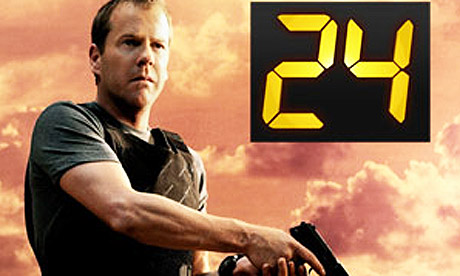
Genre. So you found what you're trying to convey, you know your characters and goals, now you must know where you're throwing them. Drop them in a fast-paced environment with fast-paced goals and you have something like the show 24. Drop them in a small town where not a lot seems to go on and you have something like Longmire. If you created your own world, it's all on your preference and the region of that world. 

Now it's your job to assess your pace.

TONE
WHY
CHARACTER
GOALS
ENVIRONMENT

Study your favorite books. It's better with books so you can see the words used to quicken or shorten the pace. But if you need fast advice, you can always check on different series genres. In shows, you can feel it more because you're watching it happen. 

(Tip from Bell and Espenson: TURN ON CAPTIONS.

When studying TV shows or movies (they're screenwriters they do this often) they always have the captions on so they can see the flow of dialogue and the choice words. To them, dialogue is music. It's their entire world or their scripts are nothing. But for novels, dialogue might be half of what is required, if at all.)

Polar Examples:


Longmire - pace of the story is through the eyes of the protagonist and based on his personality and his environment. When you go through the story, you're riding a trotting horse down a long trail. You take in the mountains, the vast farm fields, and trees in the distance. You listen to the nearby stream, you see what kind of rocks line the road as you make your way to your cabin, where a warm fire awaits, with a wife or husband making a cup of hot tea for you.


24 - based on high-stress situations and how fast character needs to achieve goals, and how much faster antagonist wants to achieve their goals. You're in a car and you speed by all the little details because they're insignificant to the problems you must deal with right now. You have to get to the end or you'll die, or your family will die, or America will go explode-y. 

Any other examples that lie in between these two opposites you can figure out yourself. You're smart. 

Go forth and multiply (your word count)!

= = = = = = =

Are there ways you figure out your pace? Is there a strategy you use?  Comment below! If this helped you in any way, please share it on Pinterest or where ever your mind desires!

Tuesday, January 26, 2016

4 Reasons Why We Need Miserable Writers


Some of the best writers were miserable. 
While I'm stuck in the middle of my book, I reflect what the new year brought us. 
Heartbreak, misery, and shock. 
But just because your life sucks doesn't mean you should give up. 
It means you have something to say.
The world hurts and our words are supposed to heal it.
What about healing the writer?
Can our own words soothe us or do we selflessly reveal our souls to help others find their own? 
Misery wants to empathize. 
We want to relate.

(Yes, this is a happy photo I took. There have been no gloomy days here so I've been extra cranky. I need my gloom or all the happy irks me. Balance, people. Works both ways.)


1. Brings Value
2. Makes You Relatable
3. Strong Emotions Produce Best Results
4. Therapy for Writer and Reader


Which writer did you relate to who had horrible experiences? Maybe you didn't relate, maybe you just felt their work was beautiful. One of my favorites is Edgar Allan Poe. If anyone read his work, they have at least one favorite. With my disturbing perspective of what's beautiful, his violent poetry speaks to me. It's dark but it's honest. He lost so many in his real life that his only outlet was writing.

Now what if he lived a happy life? Annabel Lee would not have the same impact.

When darkness veils your life, it's an opportunity to create. When Alan Rickman died, my soul broke. Didn't want to do anything that day. I got drunk and cried. My years of drawing fan art, writing fan fics, and watching his films three-fourths of my life led to a very miserable week. After I sobered up his day of death, I painted. I had to. The brushstrokes were therapeutic. I didn't hurry it up to post my tribute with everyone else, I just painted for my soul's sake. 21+ hours later, I submitted my tribute on my art page. For miserable reasons, it ended up being my best work yet. I handled every detail with perfection (as much as I could). This is one version:


Didn't sleep. Didn't eat much. Even stopped drinking. Cried a lot watching my painting become him. Skipped the Bargaining stage. Disbelief, Anger, and Sadness mostly. I shouldn't use my emotions to work, but sometimes I need to. It produces the best results. If I didn't find a way to channel my emotions, I would've kept drinking. Not good for anyone who depends on me.

Another way I coped with tragedy came more immediate, years back when my dog died. I never got serious about writing until his death. I had to write. I promised him.

It still hurts.

My first book leaks my loss of the greatest friend ever. People will find solace in their loss through acceptance of death. That's my hope, anyway. Nobody should deal with that alone.

Our darkness is what gives us value. Without miserable moments, we can't be relatable. Total misery is doom but if we find the balance to accept the light and dark, then we can find the words to make writing worth reading. I'm not saying be miserable all the time. Not saying be happy all the time either (ugh...that's the worst...so fake...hate fake, all-happy people). But we can't help what happens to us. We can help what we do about it.

Further insight to accepting our darkness: Why Our Dark Sides Make Us Better Writers

Writers who led miserable lives:

John Berryman
Virginia Woolf
Edgar Allan Poe
Tennessee Williams
Hunter S. Thompson
Ernest Hemingway
Robert E Howard
Anne Sexton
Sylvia Plath

And again, not saying misery is a good thing or that we should glorify it, but successful writers had awful lives. Certain all these committed suicide. If you think your life sucks and are not talking to someone about it, don't keep it in. Seek the light. Sometimes writing won't be enough to soothe your ache. I want you to find hope. Every aspect of your life is meaningful, even the misery. But if it hurts too much, please--please--don't keep it to yourself. Those stages to suicide are bullshit. My friend died and no one saw it coming. Wanna talk? I'm here. Seriously.

This post is a mess. No apologies. Talking about misery where spots are still sore is not my favorite, but I have to, especially if it helps you.

Tell me what you think. Tell me your feels.

Tuesday, October 20, 2015

Why You Should Work In Scrivener

Why should you have Scrivener? 
Are you a plotter? A planner? Someone who needs to see the entire book? Maybe you care about the pace and need to see the spaces of your chapters. Do you want to keep all your work in one place without a mess?

My reason? It's awesome. 
Not to sound shallow, I shall explain. I write using note cards. Oh yes. Very messy. But fun, kinesthetically pleasing, and visually-stimulating. I move the cards around the table. I pick colors at random to keep my brain from washing out. 


I'm not getting paid for this. 
Maybe I should. 
I'm saying this because it has saved me tons of time organizing my book. 

Check out this website: Literature and Latte
Download Scrivener. Do it. Do it now.

After you get through and open up Scrivener, take a look around!

Starting off
Chapters/Scenes are like note cards.
Revision Mode! It's like Beast Mode for writers!

Character template is customizable.
Handy dandy Compile means it'll put it into manuscript format for you.
I used to write in Pages. My first book was "posties" on a wall. Don't believe me? Ask my family. My poor, poor family and the giant eyesore of creativity on the entire living room wall. We lived in an apartment at the time. I needed the huge visual to see exactly where the scenes were placed, where I should have filled in the holes of the story, and what I should have taken away. Then I pulled the posties off the wall and wrote them in the computer. Then started on the story.

My first book; my first pickle out of the jar. It was a pain. I devoted my time and tried to get in three hours every day, but I had a lot of stuff going on at the time. I didn't make my personal deadline, but I had gone farther than I ever did in my life. I finished the book after my last move. Whew!

Learning from all the turmoil of writing and organizing, I found note cards are the best for me. Then I discovered there are writing programs that allow you to switch around your chapters if you want. My friend and parents' neighbor told me what he uses, but when I couldn't get it for my computer, I needed to find something else. Found Scrivener. Haven't been happier (well...at least not since I got out of the Navy).

Still skeptical? It's worth every penny. Here's a video from L&L. They pronounce it "Scrivenah" cuz you know...Brits.


Thursday, October 15, 2015

NaNoWriMo Writer's Workshop Webinar 14Oct2015


14 October held the first webinar for NaNoWriMo. These authors have amazing insight into different ways of dealing with their books, managing time, and getting unstuck in their writing. Everybody has different ways of writing. Watch this and find yours.

Just don't listen to the authors when they're talking about snacks. You want your brain to be focused on healthy eating. 

FOCUS!

(click on the words, not the image. I'm not HTML savvy enough to make it an easy click.)

* * * * *


Tuesday, October 13, 2015

Write What You Want to Know

Write What You Know. I hear many people say this. I also hear many people against prologues yet I've read Clive Cussler and he seems to be doing just fine. Do you really want to be like most people? Most people can be awfully...sheep-like.

Instead, try this:


The challenge is learning something new, or refreshing something you have knowledge of. Maybe you like historical fiction. You write historical fiction. A reliable source (Mom) knew of an author who spent years studying her subject. She'd get into the language, the clothes, the "current" events they would read in the newspaper, and all the details just to write her book as accurately as possible. She'd travel to the location of her setting. She'd take tours, she'd go to the universities and ask for information.

Write what you WANT to know.

People live in this bubble and their knowledge only goes out so far. But I believe humans naturally crave information. They're curious. They have to know things. Anybody or anything that gets in the way of that disrupts what it means to be human. But anything in the way of it knows that it cannot be stopped, even if threats of death breathe into their face. And the more you suppress a human, the more they rebel. The more they think. Why don't you want a human to be curious, they'll think.

Curiosity is a circle. A hungry circle that needs to be fed. Get out of that bubble once in a while and learn.

Want to write about Italian mobsters but live in Britain but can't leave your floral interior-designed loft that smells like your nan? Do it. Go learn. Incorporate your living quarters with your mobster book. Fuse the info that you know and the info you're studying to know.

I'm from the Northwest. I want Russians in my book. I'm studying Russian history (I took it in college and still want more), have books by Russian authors, and books on the language (one for slang, the other for...other). When I heard my pastor lived there and still keeps in contact with his translator, I knew I had to put him in my network. Not only do you need books, you need people. If you want to know more, you have to play nice. I smile and joke a lot. My military-disciplined personality goes a long way.

But if I wrote what I knew...I'd be living a life that I knew years ago that I do not want to go back to. At least right now. Maybe I'll write what I know later.

But as a veteran, I want to escape what I know. I want to write what I don't know. And that makes it fun. Any time I can escape reality, create my own worlds, and dive into them, I'm there. I don't even think writers know what will come out of the world they make. Characters from fantasy just seem to...pop out of nowhere and tell you this is how it's going to be.

Isn't that right, Caelum?
Caelum and Svetlana - "The First" - Monsters & Mercies

Write what you want to know.

You'll grow because you chose to get out of yourself.

Thursday, October 1, 2015

Conflict and Character


Apologies if my posts for this week and next seem distracted. I have good reason: my husband returned from deployment! Yay! We've missed him fiercely, especially our little monster. Happy to be under the same roof again.

We're Whole Again
As a military family, we are bombarded with obstacles. We signed up to serve our country (yes, I served for a while, but got out when we had our son) and face conflict only 1% of this nation will ever experience. Those conflicts are why I love fantasy genres. Anything to escape our reality is the best story, as long as it is, really, the best. I want a book that entertains and steers my mind from current events, the real world. I want conflict that I won't deal with if I was at sea or at home. I want an escape.

But I also want to relate to the characters. Conflict with unappealing characters means I close that book, either putting it down, or throwing it across the room. Maybe I won't even touch it at all...(cough) Twilight.

I mean no one is going to care about my husband working in the Navy if they don't understand why he puts up with the deployments all the time. There's conflict and then there's character. It's characters that drive the story. Conflict only propels them to reveal who they really are.

One reason I started writing is because I got sick of people eating up these awful books that have the weakest female characters in the world. They're not role models and they sicken me. They get published and I can see why: the conflict is believable in its genre, but the characters are lacking for some reason. Maybe it's just me, but I don't find boring personalities entertaining. They're...boring. Or annoying. This usually happens when their motivations are lackadaisy.

So how do you get out of that rut? I have some characters that I debate on allowing their existence. But I set them aside because I know they're not ready to tell me who they really are. Or I have characters that I never knew existed and there they are. My prot goes into another world and I'm just as surprised as she is to find out all the different people that live there. And it works for me. If I'm not intrigued, the reader isn't intrigued. It's a journey I love to go on despite my need-for-control quirks. Because if the story isn't driven by the characters you know and not know, then the story isn't believable. The conflict is there but the characters are who go through the conflicts. If you force them to go through the motions to solve situations, readers will know.

I can go into great detail on creating characters that aren't boring but that's very basic and I think new writers have more potential for nailing this part than they do balancing out conflict with character. So let's focus on the balance.


What is CONFLICT? Anything that hinders your character to satisfy her desires. Much different from a delay or incident, like a gun just out of reach when a victim falls while the attacker is closing in. The conflict is the attacker, not the delay, which is the gun inches from fingers.

Conflict will exist when your character has a goal. Make this goal clear to your reader.

For example: (Goal) Svetlana wants to be her own person. (Conflict) Her father, Ruslan, forces her to join the military.

The conflict will elevate when both try their hardest to achieve their goals. What makes this more dynamic is understanding the inner conflict that goes with the external. Sveta's external is her dad, and her internal would be her rebellious nature, or maybe her insecurity to stand up to him.

And goals will change because the person changes. And that's fine. What is important is that the reader must care about the character before the conflict matters. Most readers are character-driven. Humans are social creatures and naturally seek connections with others. If they don't care, they won't read. The conflict will bring the story to life by the character's motivation to reach their goals, and the reactions brought on by the conflict. Your story's core is emotion. Why is the character pushing through to the end? Why should we care?  Answer these for yourself. Ensure your story has characters we'll care about.

In the book Writing with Emotion, Tension, & Conflict, Cheryl St.John writes this principle: "What the character is doing is not as important as why he is doing it. What's happening is not as important as how he reacts to what's happening."

I highly recommend this book to study her take on conflict, although I disagree with her when she says that being angry and bickering "is acceptable for antagonists because it characterizes them, but your protagonists must have more depth." She talks about conflict not being the foot-stomping moments. What I disagree with is prots being more in depth than antagonists. The ant and the prot should be equally-motivated, if not more.

Antagonists are the ones with the most depth, I have read. They are the characters I love because they have relatable reasons to do what they do. You see? It's character-driven, not conflict. When the story has two characters with believable motivation to achieve their goals no matter what conflict, it makes for a more compelling read. When you adamantly know every character's motivations, you will soar through your writing. And St.John also explains this. And I agree with her. But let that antagonist shine.


Find some writing exercises to help develop your conflict and understand your character's motivations. Choose your protagonist, and come up with one sentence to describe their goal. Is their goal based on the conflict or is it based on personal desires? Will their goal change throughout the story or remain the same?

Do the same for your antagonist. Are they the conflict to the protagonist or is it something else? Will their goal change?

How might each character's inner conflict fight their external conflict? Will they think one way and act another?

Have fun this weekend! I'll be spending quality time with my sailor and catching up on some personal development. Later kiddos.


Thursday, September 24, 2015

6 Hacks to Motivate Writing


I struggle every day to motivate myself out of bed, turn on the Keurig, and sit in one spot and write until my four-year-old wakes up. His waking occurrence can happen five minutes after I start typing, or four hours later, when I kick myself for not making lunch. I am in no way an expert, but I found, throughout my years of writing, a few life hacks to get you going:


  1. Minimalize Your Workspace
  2. Find Your Habits
  3. Psyche Yourself Up
  4. Personal Development
  5. Eat Simple
  6. Focus on your Triforce

#1 Minimalize Your Workspace

Not minimize. Minimalize. Some photographers have a style called minimalism, where less is more in their shots. You must be free of distractions. Your work space is your sanctuary for your characters and you must treat them with respect. You are torturing them with plot and could possibly kill one of them. Being respectful is the least you can do. 

Consider your space like a date scene. You have a date with your book and all the characters want your attention. You don't talk to them while you're playing a game on your phone, or have sidebar with someone else in the room. You just don't. Unless you're talking to yourself (which could be #2 or #3 on the list) you can't afford wasting your characters' time. You have a world to suck people into. Simplify your holy ground and get to work. You have torture to do.

#2 Find Your Habits

All writers have them. You don't have to copy them, maybe you just want to try them out, but you need to find you. You find you by figuring out your quirks, your weaknesses, your strengths, and your style. This comes with every day practice.  Some writers couldn't write unless they were naked, or not wearing pants. Some had to be outside, some had to be hiding in a loft. 

I have to wear a beanie. 

Said beanie.

I caught myself playing with my hair with one hand on the keyboard, not doing anything but re-reading my work, or staring blankly at the screen. I put a beanie on my head one day and both hands got busy typing. The distraction was gone. My habit was curbed. Now I don't wear a beanie all the time...but it helps when I have a very hard time focusing.

#3 Psyche Yourself Up

What's your style? What helps you get your muse in gear? There are different learning styles for people just as there are inspiration styles.

Consider creating a playlist for your book. You're in the shower and you play songs that get your imagination going. 

(Confession: I do this all the time, even sing out loud, and pretend the characters are right there in front of me [clothed and dry, mind you...sometimes], either singing along, or acting out a scene. It helps me organize my story, especially if I'm struggling with moving the plot along.) 

I also have playlists for each major character and mood lists, depending on what mood I need to get into to write specific scenes. I have battle sequences, death, love, sex, nostalgic, etc.. I read somewhere that Audiosparx is where filmmakers go to nail the perfect track for their trailers or movie scenes.

Some inspirational music I have is from Two Steps From Hell and more well known composers like Hans Zimmer. I collect soundtracks so I can't list them all, but Two Steps From Hell is a great starting point. "Archangel" will always be my favorite when I need to get into the action scene mood.

I did mention weaknesses in #2. Your weakness can be your undoing; you can overcome it if you know what it is. Mine is perfectionism. I overcome this by whole-heartedly knowing people must read my story. They will love my characters as I do and they will love the world I pulled them into. If I don't write, I lose my mind. This is my passion. And no dark whispers in my head saying I should just give up because I will fail can stop me. 

Psyche yourself up by looking through Pinterest and finding motivational quotes from authors. Make your own board of all these (mine is called "Brie's Self-Motivation Vocation") and read them. Guaranteed one of them will spark something in you.

If you're still struggling, I would print out pictures that motivate you, or draw pictures of your characters. Draw your own fan art. As an artist, this is fun to do when I'm not writing. I draw them out of character as well. You gotta lighten up sometimes. Torture miserable characters with happiness. You might just kill them outside your story. Mwahahaha.

#4 Personal Development

Reading about writing for at least fifteen minutes will sharpen your writing skills, especially if you do this at least once a day. So take that fifteen and read a writing book. K.M Weiland and Angela Ackerman have great books on Amazon. A good writer always has learning tools in their arsenal. Buy a couple. If you're pressed on money, buy the one book that you would really benefit from. Mine was "How to Write a Novel in 90 Days" to get through my first book. I didn't make it in 90 days but I made it further than I ever would have. And I finished, so that says something. 

You'll hear from dozens of people how they want to write a novel someday. Maybe you're one of them. Be that person who actually commits. Don't wait around for something tragic to happen in your life to get you started (yes...like I did. More on that another time.).

#5 Eat Simple 

I don't mean go out to a fast food joint and overload on calories (that'll lead you to a carb coma), Stay in the house, fix something quick, eat it, then get to writing. I will post another blog on fast nutrition that's healthy and helps your brain focus. For this, I will say avoid making omelettes or other time-consuming products. Being a Beachbody coach, I have tricks to help you stay on track without slaving away in the kitchen. 

In the morning, I usually make Shakeology, but if I don't want to make a lot of noise, I make a cup of greek yogurt and granola, or cottage cheese and berries. It takes less than five minutes to prepare and my brain will thank me for fueling it something besides black coffee.


#6 Focus on Your Triforce

Mind, Body, Soul.

  • Your soul is the writing but your mind is conflicted, your body is tired, and your soul has temporarily lost its passion.


  • Your body craves something physical or nutritional. If it doesn't get exercise or proper food, your mind loses focus, and your soul is left to wait, buried in a weak body.


  • Your mind is not learning; it's bored and all those perishable skills are waning. Your body is sluggish and your soul cannot be happy with a distracted, lazy brain. 


  • Your soul is not being fed things that make it happy. You're not relaxing and are worried about work, school, or fitness. Life is getting in the way of actual life: your purpose. 


This is the balance of life. We have to find a way to keep our Triforce in check because if one piece fails, they all fall apart. 

Personal Development helps with mind issues, but so does going to Bible Study, or meditating, or avoiding family drama. Learning something new every day makes your wit sharper and your curiosity satiated. Watch the mental stress levels. 

If work is straining you, try soothing your soul with a hobby, which may help destress you. If my husband comes home from work (yes, I said if. It's a military thing.), he'll either watch TV, or play video games. He doesn't want to deal with physical stress, like playing with our kid. He may try, but Tag is out of the question.

After I clean the house and run errands, I like to write, draw, or game. I also have a habit of running out of the house before sunset with my camera gear, and practice shooting. If you don't believe me, I have a Flickr account here. And this is one of my shots (it is available for print):


For balancing the body, I cannot stress exercise enough. I used to be very overweight and was miserable. There was no sense in pursuing my dreams because I didn't like myself enough to do anything. I was a horrible role model for my son and I am glad that chapter in my life is done. But it is never closed. I want people to know my struggles so they don't feel alone. While I started my first book, I also got into P90X. Everything started falling into place when I took care of myself. Thus, the Triforce revelation.


Leave a comment or question! Let me know how I have helped you or confused you. :D 

If you're interested in healthy living, find me on Facebook at Facebook.com/tomacrux. I'm happy to answer any questions you have. Or if you have a body transformation story, I'd love to hear it! Always excited to meet new people!